
Organic fertilizer production: Dry granulation vs Wet granulation process
Granulation technology is the core link of organic fertilizer processing, directly affecting production cost, particle quality and biological activity. Flat die pelleting machine dry granulation and disc granulator wet granulation are two mainstream molding processes for organic fertilizer production. The two processes adopt different molding principles, with distinct differences in raw material adaptability, production flow and finished product performance, suitable for differentiated fertilizer production demands.
Flat die dry granulation adopts pure physical extrusion molding without water or binders. It adapts to low-moisture and fully decomposed organic raw materials like fermented manure and straw powder. The simplified process requires no drying treatment, featuring low energy consumption and zero nutrient loss. It perfectly preserves beneficial bacteria and organic activity, making it ideal for high-activity bio-organic fertilizer production.
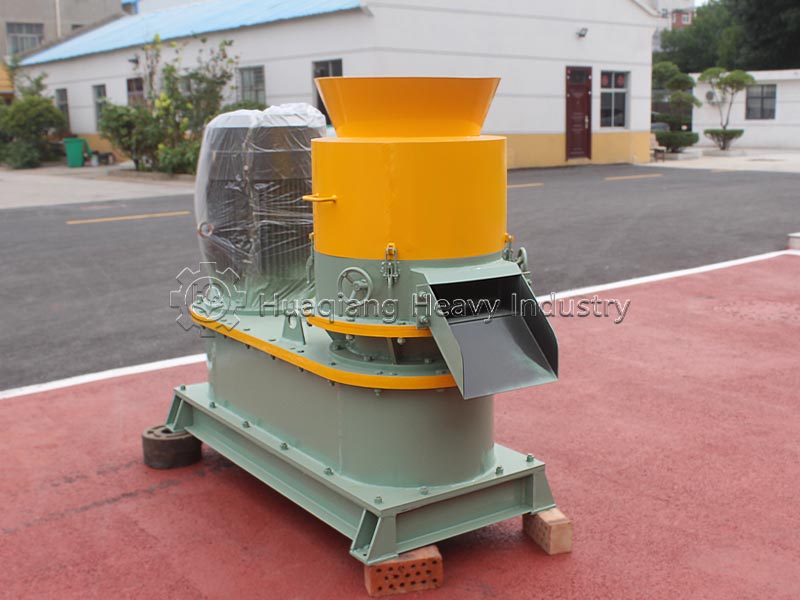
In contrast, disc wet granulation relies on disc rolling force and sprayed water or liquid binders to aggregate materials into particles. It fits raw materials with high fiber content and uneven fineness. The finished particles feature high roundness, smooth surface and strong compression resistance, with excellent appearance and storage stability.
In practical application, dry granulation boasts low cost and retained fertilizer activity, though particle roundness is average. Wet granulation delivers superior particle quality, yet it requires supporting drying equipment, leading to higher energy consumption and more complex procedures.
In conclusion, manufacturers can select processes based on production needs. Dry granulation is preferred for active bio-organic fertilizers, while wet granulation is more suitable for conventional organic fertilizers that prioritize particle appearance and durability.