
What types of fertilizers are suitable for processing on a disc granulation production line?
Disc granulation production lines feature a simple structure and flexible operation, with a clearly defined scope of application in fertilizer processing.
Organic fertilizers and bio-organic fertilizers represent the most typical applications. Decomposed livestock manure, straw powder, mushroom residue, peat, and similar organic materials often have poor binding properties, making wet granulation difficult. The disc granulation process relies on the rotation of the disc to cause the material to tumble; combined with the addition of appropriate moisture, the powdered material gradually agglomerates into spherical granules. As the physical forming process occurs at ambient temperature, functional bacteria are not inactivated by high heat, effectively preserving the product’s live bacterial content.
Organic-inorganic compound fertilizers are also suitable. These products combine organic materials with additives such as urea, ammonium phosphate, and potash, resulting in significant variations in raw material density and particle size. The tumbling granulation mechanism of the disc granulator offers good compatibility, allowing organic and inorganic components to be agglomerated into a single granule.
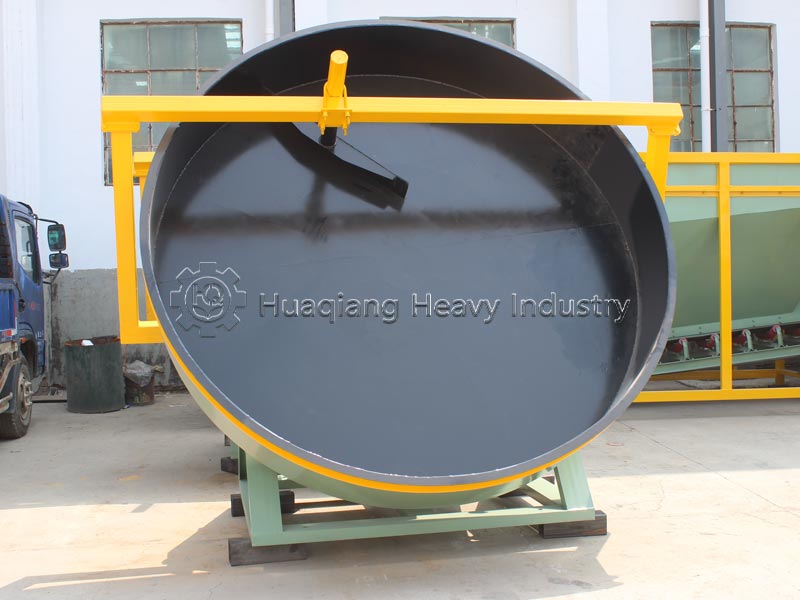
Low-to-medium concentration NPK compound fertilizers are another common product. For formulations with a total nutrient content of 25% to 35%, disc granulation technology ensures stable pellet formation and good granule sphericity. However, at higher concentrations, material adhesiveness is often insufficient, leading to a lower granulation rate; in such cases, rotary drum or extrusion processes are more appropriate. Additionally, specialty and functional fertilizers—such as those enriched with secondary nutrients, trace elements, humic acid, or amino acids—can also be processed using disc granulation.
It should be noted that disc granulation is sensitive to moisture levels; excessive moisture causes the material to stick to the disc, while insufficient moisture hinders granule formation. This method is best suited for small-to-medium-scale production involving diverse product varieties, with typical single-line capacities ranging from 10,000 to 50,000 tons per year. Overall, disc granulation production lines are highly versatile for organic fertilizers, bio-organic fertilizers, organic-inorganic compound fertilizers, and low-to-medium concentration compound fertilizers; enterprises should make their selection based on raw material characteristics and product positioning.