
Key to NPK fertilizer granulation: A practical guide to moisture control, determining granule quality
In NPK fertilizer production lines, moisture control is the core of NPK compound fertilizer granulation technology. It directly affects granule formation rate, strength, and drying costs, and is crucial to avoiding granulation failure. Scientifically managing moisture at each stage, relying on NPK fertilizer production equipment, is essential for consistently producing high-quality NPK compound fertilizer granules.
In the raw material pretreatment stage, moisture content needs to be controlled between 2% and 5%. A double axis paddle mixer is used to mix the raw materials and binder evenly. Excessive moisture easily leads to clumping, while insufficient moisture results in uneven dispersion. Fine-tuning is necessary based on the raw material’s moisture content to ensure loose, clumpy material.
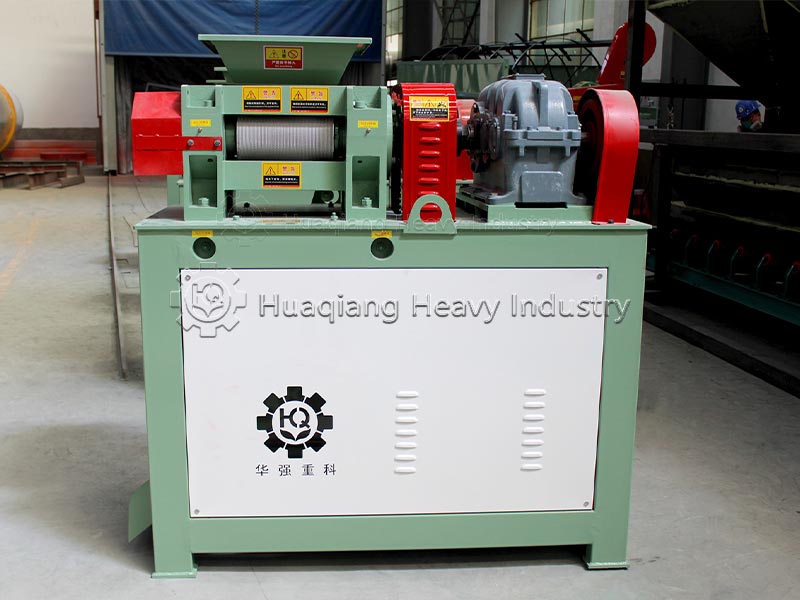
In the core granulation stage, moisture content should ideally be between 13% and 18%. Whether using a drum or double roller press granulator, insufficient moisture makes granulation difficult and results in a low yield; excessive moisture leads to soft granules, sticking to the walls, and uneven particle size. Precise adjustment of the water addition is necessary to match the granulator parameters.
In the drying and cooling stage, moisture content needs to be reduced to 1.5%-3%. Drying temperature must be increased gradually to avoid granule cracking; achieving the required moisture content after cooling prevents moisture absorption and clumping. Simultaneously, it’s crucial to coordinate with fertilizer production equipment to ensure smooth operation of each stage.
In summary, moisture control in NPK fertilizer granulation must be implemented throughout the entire process. Precise adjustment based on raw material characteristics and equipment parameters, avoiding moisture imbalances, is essential to balance granulation efficiency and granule quality, thus contributing to stable production line operation.