
BB fertilizer mixers are fundamentally unsuitable for processing NPK blended fertilizers
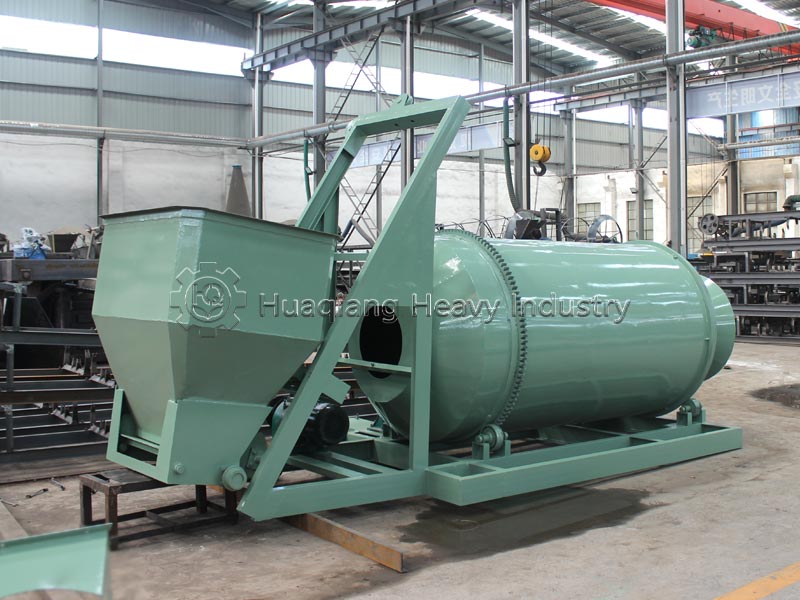
BB fertilizer mixers, as specialized equipment for NPK blended fertilizer production, are designed to achieve uniform physical mixing of different single-element fertilizer raw materials. However, their compatibility has clear boundaries; not all NPK blended fertilizers can be processed.
The least suitable fertilizers to process are highly hygroscopic NPK blended fertilizers. These fertilizers contain highly hygroscopic raw materials such as urea and potassium chloride. During mixing, they easily absorb moisture and clump due to friction and increased temperature. The mixing structure of a BB fertilizer mixer cannot break up these clumps; instead, it will crush them into larger pieces, leading to uneven mixing.
Secondly, NPK blended fertilizers with excessively large particle size differences are unsuitable. If the raw material contains both fine powdered single-element fertilizers and large-particle slow-release fertilizers, the mixing strength and uniformity of the BB fertilizer mixer are insufficient to achieve thorough mixing of raw materials with different particle sizes, easily resulting in stratification.
Furthermore, NPK blended fertilizers containing sticky impurities are also unsuitable. If the raw materials contain sticky impurities such as soil and straw fragments, they will adhere to the inner wall of the mixer and the mixing paddle, affecting the mixing effect and increasing the difficulty of cleaning the equipment. Long-term use can easily lead to equipment wear and frequent malfunctions.
In summary, BB fertilizer mixers are only suitable for loose, uniformly sized, and low-hygroscopic NPK blended fertilizers. Avoiding the three unsuitable types mentioned above is crucial to ensuring production efficiency and product quality.