
Disc granulation technology vs. Double roller press dry granulation technology: Which costs more?
The cost difference between disc granulation technology and double roller press dry granulation technology lies primarily in the combined investment and long-term operating costs of the entire process, not just the price of a single piece of equipment. Many practitioners only focus on the initial investment, ignoring hidden costs. The cost of either technology must be assessed comprehensively considering both short-term and long-term factors.
In the short term, disc granulation technology has a higher initial investment. It is a wet process, requiring supporting drying and cooling equipment, with a total investment 2-3 times that of double roller press dry granulation. Double roller press dry granulation does not require drying, has compact equipment, and its initial investment is only 30%-50% of that of disc granulation, making it suitable for small to medium-scale production.
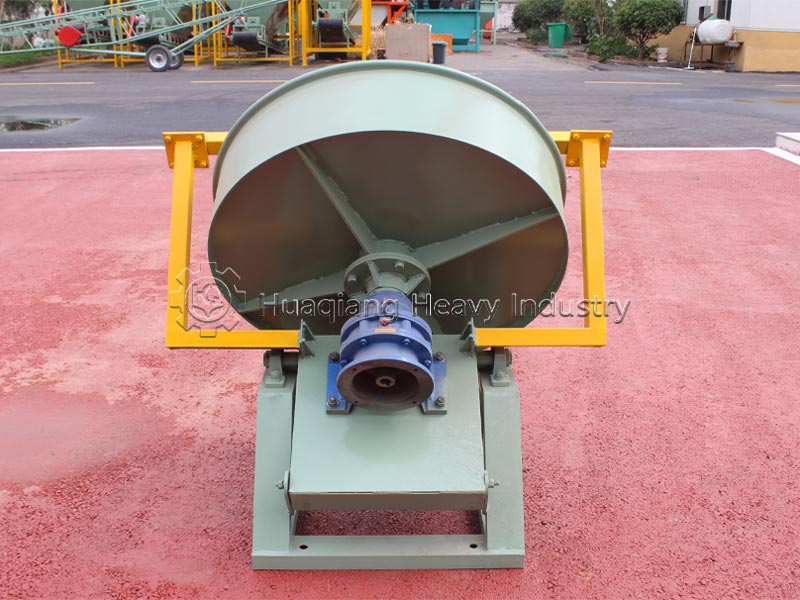
In terms of long-term operating costs, disc granulation still has a disadvantage. Its drying process is extremely energy-intensive and requires more binder, resulting in higher material and energy costs. Double roller press dry granulation has no drying energy consumption, uses less binder, and although the pressure rollers need to be replaced periodically, its overall operating cost is more than 30% lower than that of disc granulation.
In terms of scale, the high investment in disc granulation is difficult to amortize in small-scale production; in large-scale production, even if some initial costs are amortized, its high energy consumption still makes the total cost higher than that of dry roller extrusion.
In summary, whether in the short or long term, the total cost of disc granulation technology is higher than that of double roller press dry granulation technology. The investment in disc granulation is only reasonable when extremely high sphericity of the finished product is required.