
Disc granulation processing of chicken manure fertilizer: Key considerations for high-efficiency production
Chicken manure is rich in organic matter and is a high-quality organic fertilizer raw material. However, when processed using disc granulation technology, its high moisture content, strong viscosity, and tendency to clump can lead to problems such as sticking to the disc, low pelleting rate, and loose pellets if not handled properly.
First, pay attention to raw material pretreatment. Chicken manure needs to be fully decomposed beforehand. Undecomposed chicken manure is prone to fermentation and temperature rise during granulation, causing pellet cracking. Simultaneously, it needs to be dehydrated to a moisture content of 50%-60%. Too high a moisture content will cause sticking to the disc, while too low a moisture content will make it difficult to form pellets. It also needs to be crushed to remove impurities such as stones and straw to avoid jamming or affecting pellet uniformity.
Second, control the disc granulation process parameters. Adjust the rotation speed to 20-30 rpm. Too fast a speed will result in overly fine pellets and splashing, while too slow a speed will result in a low pelleting rate. The tilt angle should be controlled between 45°-55°, adjusted flexibly according to the viscosity of the chicken manure to ensure that the pellets can roll and form in the disc without piling up or slipping.
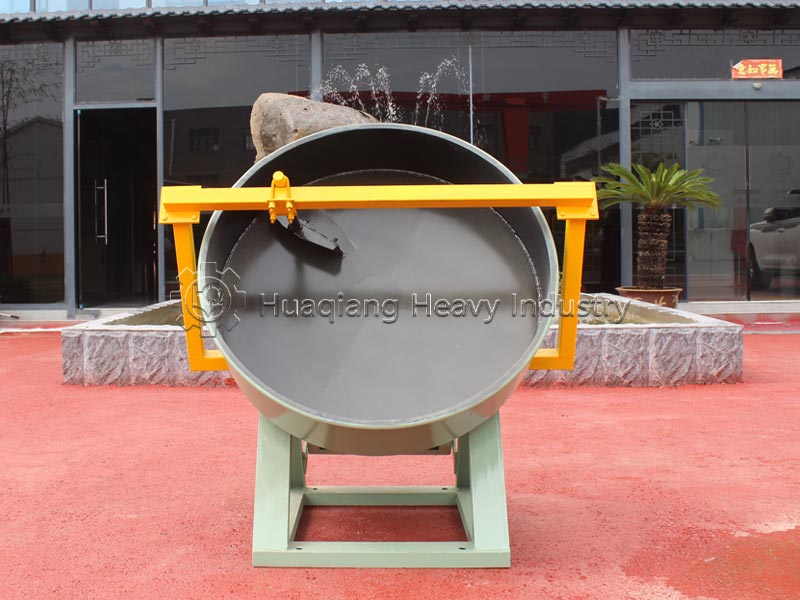
Pay attention to the proper addition of auxiliary materials. Chicken manure is quite sticky, so adding appropriate amounts of loosening agents such as straw powder and sawdust can reduce stickiness and minimize sticking to the pelleting tray. If the stickiness is insufficient, a small amount of bentonite can be added as a binder to improve pelleting rate. The amount of additives added should be controlled between 10% and 20%.
Finally, proper post-processing is crucial. After granulation, the pellets should be dried promptly to reduce the moisture content to below 15% to prevent mold growth. Simultaneously, sieving should be performed to remove substandard particles, which can then be recycled to the pelleting tray for secondary granulation to minimize losses. In summary, proper pretreatment, parameter control, and additive addition are essential for efficiently producing qualified chicken manure fertilizer using disc granulation technology.