
What are the differences between roller compaction and pan granulation for NPK fertilizer production?
In the production of NPK compound fertilizers, the granulation method directly influences the shape, density, hardness, and appearance of the final granules. Fertilizer roller granulators and disc granulators are two common types of granulation equipment; while both can be used for NPK fertilizer processing, they operate on different forming principles, resulting in variations in the quality of the final product.
1.Comparison of Granule Density and Hardness
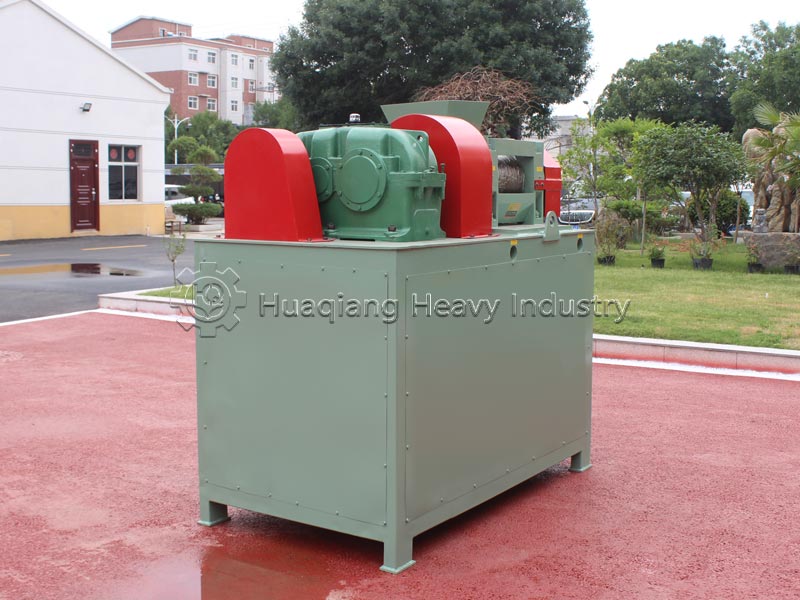
Double roller press granulators apply pressure to powdered raw materials using two rollers, forming the material into sheets or blocks, which are subsequently crushed and screened to produce granules. The resulting granules typically feature high density, a compact structure, and excellent compressive strength. In contrast, pan granulators rely on the rolling and binding of materials within a rotating pan; the hardness of the final granules is heavily influenced by the binding properties of the raw materials and their moisture content.
2.Comparison of Granule Appearance and Specifications
NPK granules produced via roller compaction are generally irregular in shape, though screening can achieve a relatively uniform particle size. Pan granulation, however, tends to produce well-rounded, spherical granules with smoother surfaces and a more appealing visual quality. For fertilizer products where appearance is a priority, pan granulation offers a distinct advantage.
3.Production Process and Raw Material Adaptability
Roller compaction is a dry-processing method; it typically eliminates the need for adding large amounts of water or undergoing high-temperature drying, which helps simplify the production workflow. Pan granulation, by contrast, usually requires moisture adjustment and the integration of additional equipment—such as dryers and coolers—making the production process relatively more complex.
4.How to Choose a Granulation Method?
If your priorities are granule compactness, a simplified production process, and lower energy consumption, roller compaction is a suitable choice. If, however, you prioritize well-rounded, spherical granules and a polished appearance, pan granulation is the better option.
In summary, both granulation methods have their own unique characteristics for NPK compound fertilizer production lines. The final choice should be based on factors such as the nature of the raw materials, quality requirements for the finished product, investment budget, and the scale of production.