
How does a rotary drum granulator empower NPK fertilizer production technology?
Within the technological framework of NPK fertilizer production, the value of a rotary drum granulator lies in its ability—through process integration and parameter control—to link stages such as proportioning, mixing, granulation, and drying into a stable, cohesive production chain.
First, it offers a broader process window for transforming formulations into granules. As the ratios of urea, ammonium phosphates, and potash in NPK formulations shift frequently, the material’s stickiness and granulation characteristics change accordingly. By coordinating variables such as drum rotation speed, inclination angle, steam input, and residence time, a rotary drum granulator can accommodate the granulation requirements of diverse formulations. For instance, in high-nitrogen formulations, steam can be used to increase moisture and activate the surface tackiness of urea; conversely, for high-potash formulations—which often lack sufficient natural stickiness—operators can adjust residence time and water spray rates to compensate. This process flexibility ensures that the production setup does not require major overhauls when switching between different formulations.
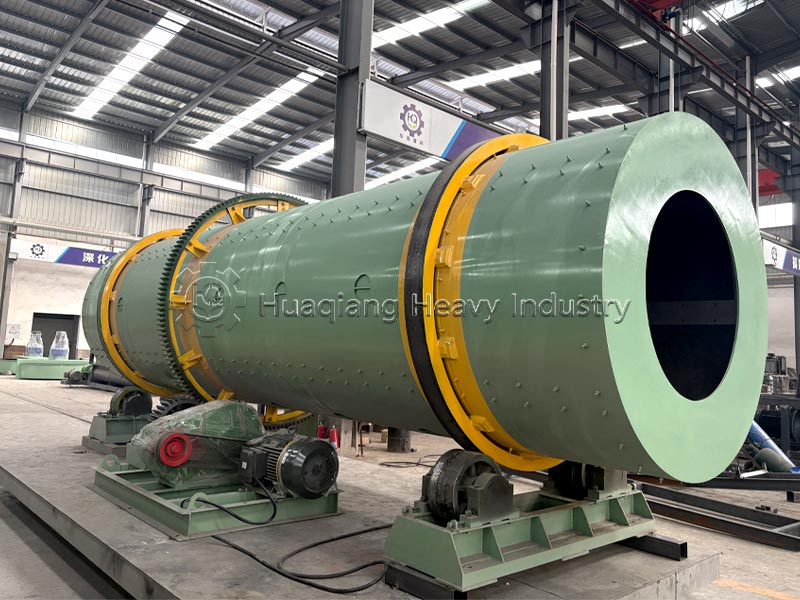
Second, it facilitates a stable material flow for continuous production. The rotation of the drum causes the material to tumble and move axially in a consistent, predictable manner. With feeding, granulation, and discharge occurring continuously, the system avoids the interruptions and fluctuations inherent in batch-style production. When integrated with automated proportioning and downstream drying and screening processes, the entire NPK fertilizer production line operates at a steady, continuous rhythm, ensuring stable output while requiring operators only to monitor key parameters.
Third, it alleviates technical demands on downstream processes. As granules grow and become compacted within the drum, they emerge with a certain degree of structural integrity and sphericity. This makes the thermal load in the drying stage more manageable, reduces the rate of material recycling (fines/oversize) during screening, and minimizes dust generation during packaging. By ensuring high-quality granulation early in the process, the entire production chain gains greater tolerance for operational variations.
In summary, the contribution of a rotary drum granulator to NPK fertilizer production technology is not merely a matter of individual equipment performance; rather, it lies in its capacity to integrate formulation adaptability, continuous production flow, and stability across downstream processing stages.